
Buyer's Guide
Pick the right gear for the job
Stick, MIG or TIG. Leather, FR cotton or hybrid. Here's how to match gloves and protective clothing to the work you do, without the guesswork.
01 / Welding gloves
Start with the process
Every welding process puts out a different mix of heat, spatter and UV, and asks for a different amount of feel. Pick the glove built for yours.
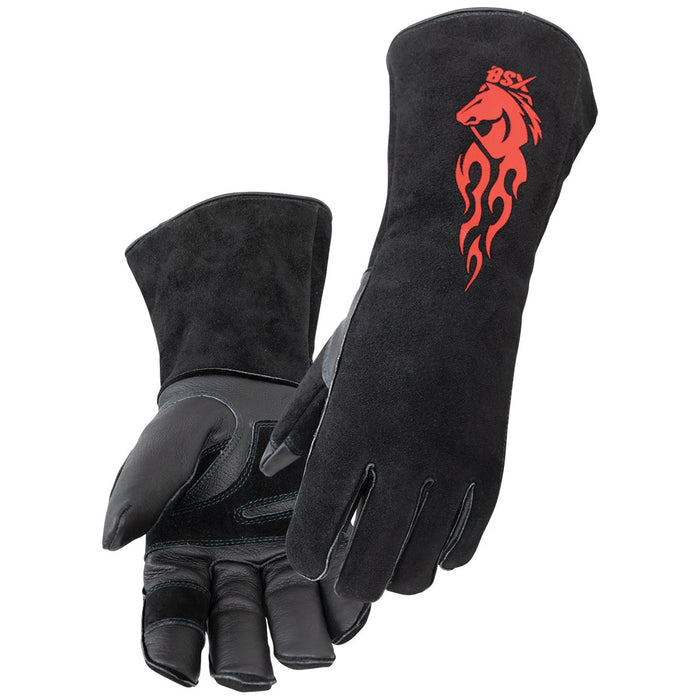
Stick gloves
Stick welding throws the most heat and spatter, so these are the thickest gloves in the lineup. Expect split cowhide, insulated linings and long gauntlet cuffs.
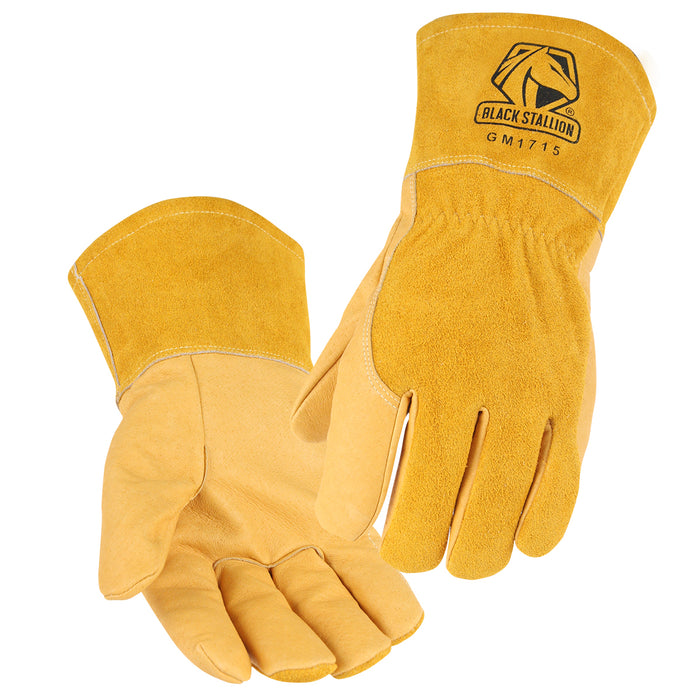
MIG gloves
MIG runs hot but fast, so these balance protection with enough feel to work the gun trigger all day. Often grain leather palms with reinforced high-wear areas.
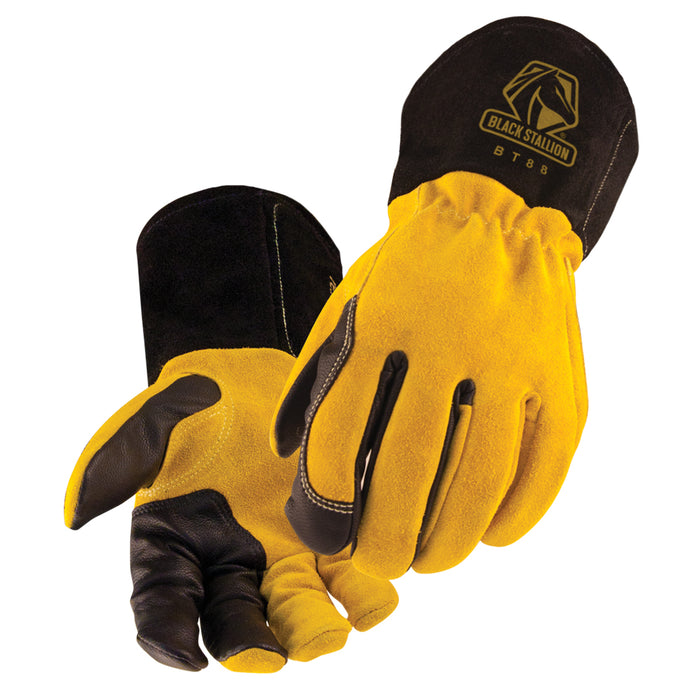
TIG gloves
TIG is low on spatter and high on precision. Thin goatskin or kidskin gives you the fingertip control to feed filler rod and hold a steady torch.
Beyond the arc
Gloves for the rest of the job
Grinding, cutting, handling hot stock and loading the truck all call for something different.
- High-temp and thermal for handling hot parts, furnaces and torch work
- Cut-resistant for sheet metal, fresh cuts and sharp edges, rated by ANSI/ISEA 105 cut level
- Drivers for general handling, rigging and driving
- Mechanics and ergonomic for fit-up, assembly and tool work
02 / Leather 101
Know your leather
The hide decides how a glove or jacket feels, breathes and holds up to heat.
Tough all-rounder
Cowhide
Thick and durable with strong heat and abrasion resistance. The go-to for stick and heavy MIG gloves.
Breathable
Pigskin
Porous, so it breathes well and stays soft after it gets wet. A favorite for MIG gloves and jackets.
Thin and strong
Goatskin
Tight grain gives a strong, thin glove with excellent feel. Common in TIG gloves.
Maximum feel
Kidskin
The softest, thinnest option, from young goats. Built for precise TIG work and filler rod control.
Smooth grain
Cowskin
Grain leather from cattle hides with a smooth, supple finish. Shows up on MIG palms for grip and comfort.
Outer layer
Grain leather
The smooth outer surface of the hide. Thinner, more supple and more abrasion resistant, so it gives better dexterity and a cleaner look.
Inner layer
Split leather
The fibrous layer split from under the grain. Rougher and often thicker, with good heat resistance at a lower cost. The workhorse of stick gloves and jackets.
03 / Protective clothing
Leather, FR cotton or hybrid
Your shirt and jacket stop sparks, spatter and UV from reaching your skin. Choose the material by how much your process throws at you.
Maximum protection
Leather
The toughest barrier against heavy spatter and slag. Heavier and warmer, so it earns its place on high-amperage and overhead work.
- Stick and heavy MIG
- Out of position and overhead
- Jackets, cape sleeves, bibs and aprons
Light and cool
FR cotton
Flame-resistant cotton is lighter and more breathable, so it stays comfortable through a long shift. Best where spatter is light.
- TIG and light MIG
- Hot shops and summer work
- Shirts, jackets, pants and coveralls
Best of both
Hybrid
FR cotton bodies with leather where the spatter lands, usually the sleeves. You get leather protection on your arms and a cooler fit everywhere else.
- All-day MIG
- Mixed processes
- Shop and field work
Polyester, nylon and other synthetic fabrics can melt and stick to skin. Wear FR or natural-fiber layers under your welding gear.
04 / Gear by job
Build your kit
Starting points for the most common setups. Your employer's hazard assessment always comes first.
Recommended starting kit
| The job | Gloves | Upper body | Add-ons |
|---|---|---|---|
| Bench TIG | TIG gloves | FR shirt | Welding cap |
| Production MIG | MIG gloves | FR cotton or hybrid jacket | Sleeves, screens |
| Heavy stick | Stick gloves | Leather jacket | Bib or apron |
| Overhead and out of position | Stick gloves | Leather jacket or cape sleeves | Cap or hood |
| Field and pipeline | Stick or MIG gloves | FR coveralls | Welding blanket |
| Fab shop floor | MIG gloves | Welding jacket | Curtains to protect the crew |
05 / Fit
Gear only works if it fits
Loose gear snags and lets sparks in. Tight gear restricts movement and wears out fast.
- Gloves should fit snug with no extra material at the fingertips. Measure around your palm and check the chart.
- Jackets need room to reach overhead without the hem riding up or the sleeves leaving your wrists.
- Sleeves and cuffs should overlap your gloves so there is no gap at the wrist.
- Pants should cover the top of your boots. Skip cuffs, which catch spatter.
- Collars and pockets stay closed so sparks have nowhere to land.
Rule of thumb
Match the gear to the heat
Not sure where you land? Think about the hottest, messiest weld you do in a normal week and gear up for that one.
Leather for heat. Thin for feel. FR for everything else.
Still deciding?
Tell us the process, amperage and where you weld, and we'll recommend a kit.